
Creative Pixel World
Terraria fuses sandbox exploration with challenging combat in a compact 2D canvas, inviting players to carve, craft, and survive across endlessly generated pixelated worlds. This Terraria review highlights creative gameplay, a deep crafting system, and a building sandbox that supports exploration and multiplayer adventures as you progress toward boss battles. With a focus on procedurally generated world generation, varied biomes, and a robust modding scene, Terraria features a flexible loop that rewards curiosity and experimentation. Its graphics lean into pixel art while the soundtrack, events, and updates keep the experience fresh, making Terraria updates a key part of the ongoing appeal. Whether you dive in solo or with friends, the game’s longevity rests on exploration and building, crafting, and cooperative challenges that sustain a thriving online community.
Overview and Premise
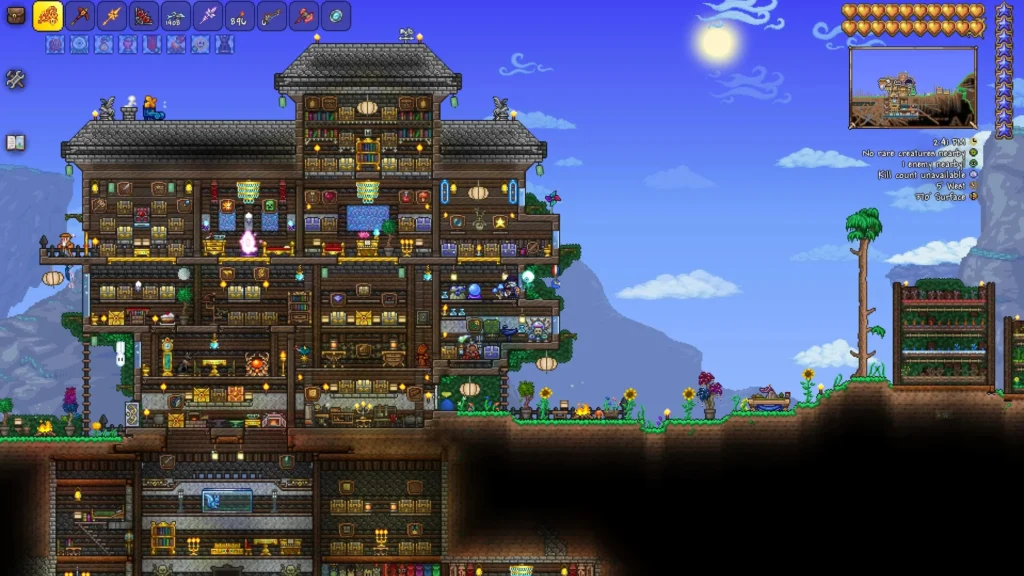
Terraria places you in a procedurally generated world with a night sky, mountains, rivers, and endless caverns. You awaken with basic tools and a sense of curiosity. The core concept is survival through exploration, resource gathering, and crafting; there is no fixed ending, only progression through gear, biomes, and encounters with the world’s myriad creatures. The premise is simple: dig, build, fight, and explore. The game uses a 2D, side-scrolling perspective with a crisp, pixel-based art style that communicates clarity even in chaotic combat. Every world seed creates a distinct map with subterranean labyrinths, floating islands, deserts, forests, and corrupted or crimson regions that alter the gameplay. The player’s goals evolve from survival to mastery of the tools and secrets the world hides.
Gameplay and Mechanics
Core systems at a glance anchor the player’s progression, offering a structured yet flexible loop that invites experimentation. Mining, crafting, and combat form the backbone of every session, while exploration reveals new resources, biomes, and challenges.
- Mining and resource gathering drive early progression, with ores unlocking tools, armor, and new crafting stations as you push deeper into layered biomes and underground caverns.
- Engaging combat rewards precision and preparation, with a wide arsenal of weapons, accessories, and tactics that scale with your world’s progression and the rambling roster of bosses.
- Crafting systems encourage experimentation, from basic tools to complex machinery, while building allows functional bases and imaginative structures that reflect player creativity and resource availability.
- World generation and exploration variety deliver distinct maps each run, balancing biomes, transitions, floating islands, and biome-specific loot that keeps exploration fresh and challenging.
- Multiplayer adventures enable cooperative play, server communities, and shared builds, though performance and balance vary with host hardware, mods, and cross-server connectivity.
- Regular Terraria updates, event content and modding support extend longevity, sustaining player interest through new items, bosses, and challenges long after the initial playthrough.
Together these mechanics enable varied play styles, from careful scouting and base-building to fast-paced spelunking and boss strategies.
Visuals, Sound and Art Direction
Visuals in Terraria lean into crisp pixel art that remains readable at small or large scales. The art direction favors bold silhouettes, bright biomes, and clear item icons, allowing players to distinguish ore types, tools, and enemies at a glance. The world is composed of chunky blocks and simple animations, yet the effect is instantly legible and nostalgic. The verticality of the terrain—from sun-drenched plains to deep, shadowy caverns—reads as a map you can navigate by intuition. Lighting, parallax in distant layers, and a compact sprite set combine to deliver a timeless, approachable aesthetic that supports quick decision making during frantic battles. The aesthetic choice complements fast pacing without sacrificing clarity.
Replayability and Community
Terraria’s longevity rests on seeds and procedural world generation that yield a fresh map, new loot layouts, and unexpected biome interactions with every run. The sandbox supports countless play styles, from meticulous base-building projects to high-risk spelunking challenges that push gear and tactics to the edge. A robust community surrounds the game on PC and consoles alike, with popular servers hosting coordinated events, cooperative homes, and race formats that test speed and strategy. Modding communities add entire ecosystems of content, while cross-platform discussion, guides, and fan-made challenge runs keep the conversation active. The result is a living, breathing ecosystem that invites ongoing experimentation and social play.
Key Features and Benefits
Terraria blends a pixelated, 2D survival world with a deep, flexible sandbox that supports diverse playstyles and creative experimentation.
In this Terraria review, we examine how exploration, building, and combat intertwine to deliver a compelling journey across a constantly evolving world.
Key features such as a robust crafting system, expansive world generation, dynamic exploration rewards, and challenging boss battles define the core experience.
Terraria shines in both solo quests and multiplayer adventures, where cooperation expands possibilities for exploration, base-building, and epic encounters.
With ongoing Terraria updates and a vibrant community, the game continuously adds new items, biomes, and events that keep the pixelated world fresh.
Exploration and World Generation
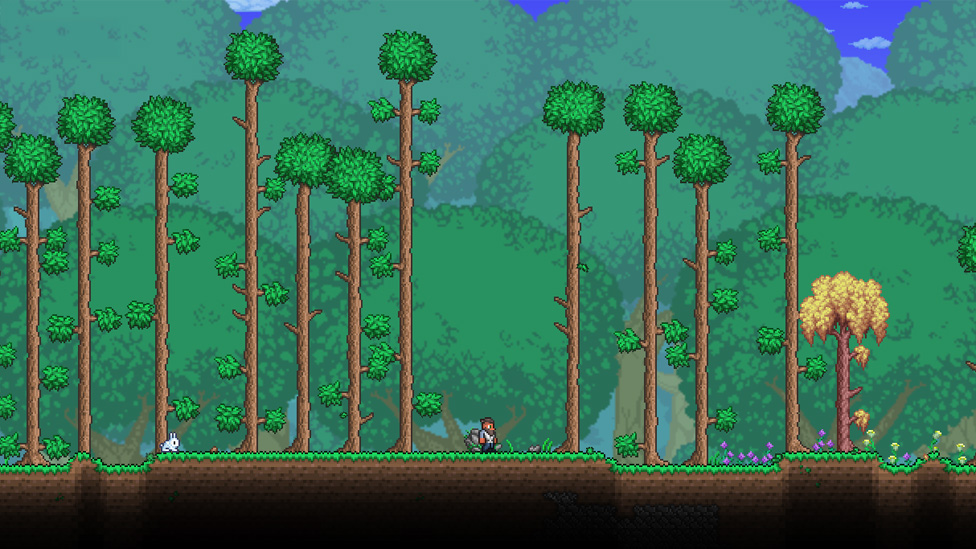
Exploration in Terraria rewards curiosity and strategic navigation, turning every seed into a fresh adventure that challenges players to map caverns, surface biomes, and hidden temples.
The world generation blends reliability with random twists, ensuring discovery remains rewarding across long play sessions.
- Procedural world generation creates a vast, layered map with diverse biomes, floating islands, underground caverns, and procedurally spawned zones that reward careful exploration and strategic mapping.
- Biomes vary by region and depth, offering unique resources, enemies, and environmental hazards that push players to adapt tactics as they descend, traverse underground rivers, and navigate drifting meteor fields.
- Treasure caches, temples, and hidden structures reward curiosity with rare gear, cosmetics, and surprising loot that encourage players to press deeper into the world.
- Event-driven exploration, such as meteor showers and eclipse encounters, adds rotating objectives that diversify play sessions and foster teamwork for bigger rewards.
- Seed sharing and map awareness foster community challenges, where players chase landmarks and optimize routes to reach hard-to-find biomes faster in subsequent playthroughs.
- Navigation tools, including the minimap and world map, help plan routes, locate biomes, resources, and danger zones, balancing risk with the thrill of discovery.
As players uncover treasures and unlock shortcuts, the sense of progress deepens, encouraging more daring explorations. The combination of world variety and reward structure sustains long-term engagement.
Building, Crafting and Progression
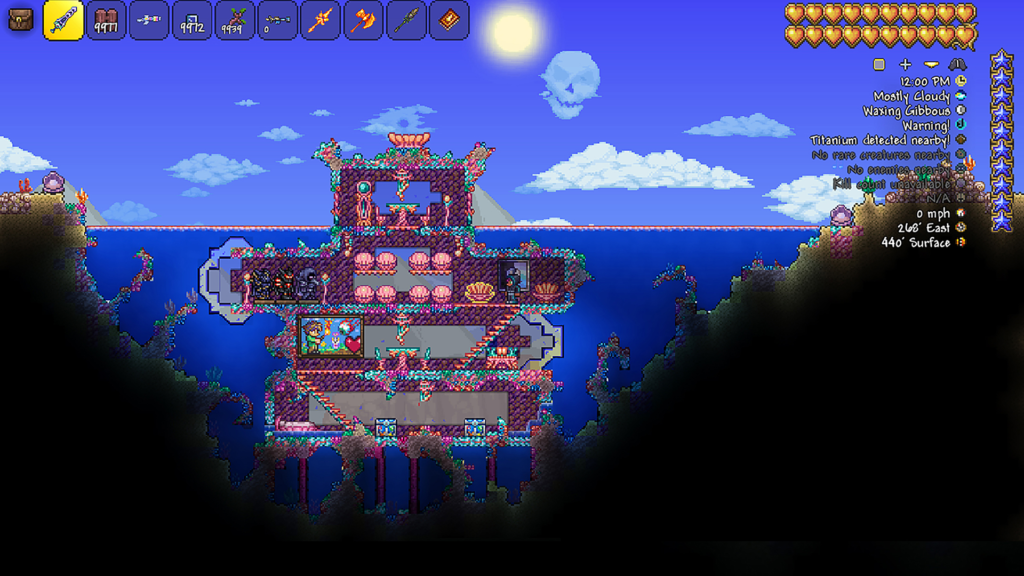
Building and crafting form the creative heartbeat of Terraria, letting players construct functional bases and intricate systems that evolve as they progress.
The freedom to shape environments is matched by a thoughtful progression loop, where resources, recipes, and tools respond to exploration and combat achievements, ensuring steady growth.
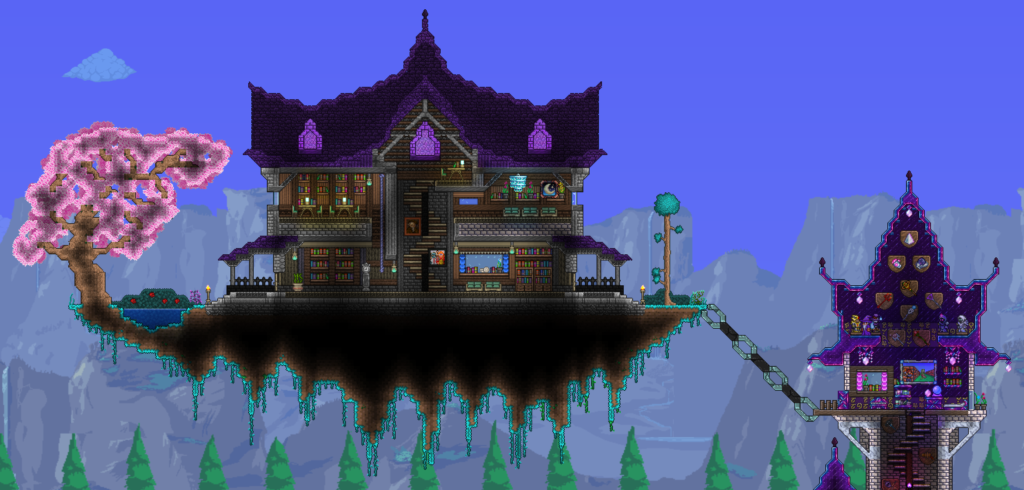
- Creative freedom in building with a wide palette of blocks, furniture, and functional components enables architectural expression from compact bases to sprawling fortresses.
- Crafting systems scale with resources and stations, inviting players to mine, farm, and barter to unlock new recipes and upgrade tools gradually.
- Progression loops tie gear and advancement to exploration and boss defeats, unlocking deeper biomes, better weapons, and access to advanced crafting benches.
- World customization through corruption, crimson, or purified biomes influences item availability and enemy behavior, pushing players to adapt base design and strategies.
- Automation and wiring enable doors, traps, elevators, and monitoring systems, increasing base efficiency and enabling complex logistical setups.
- Ongoing updates and a thriving modding community expand crafting depth, add new materials, and refresh building challenges over time.
Building and crafting rarely feel repetitive, offering new layouts and item combos that keep player imagination engaged across many cycles of play.
Combat, Enemies and Bosses
Combat in Terraria blends movement, timing, and resource management to create tense, satisfying encounters that reward skillful play across ranged, melee, magic, and summons.
Enemy variety scales with progression, ensuring challenges remain fresh as new tools and tactics unlock throughout the adventure.
- Dynamic combat system requires precise timing, positioning, and weapon choice to handle waves of enemies that vary with biome, depth, and environmental hazards.
- Ranged, melee, magic and summons each have distinct feel and scaling, encouraging players to experiment with class combinations and adaptive loadouts.
- Boss battles punctuate progression, featuring multi-phased encounters, stage mechanics, and loot rewards that redefine late-game power curves.
- Boss arenas and supportive NPCs influence strategy, prompting players to craft traps or builds that maximize survivability and DPS during climactic fights.
- Loot variety includes weapons, accessories, and crafting components that enable new combinations and synergies for different playstyles.
- World events and mini-bosses provide optional, time-limited challenges that keep combat engaging between major boss battles and allow experimentation.
The variety of enemies and fight mechanics ensures that mastering combat remains a compelling goal throughout the journey.
Multiplayer and Co-op Features
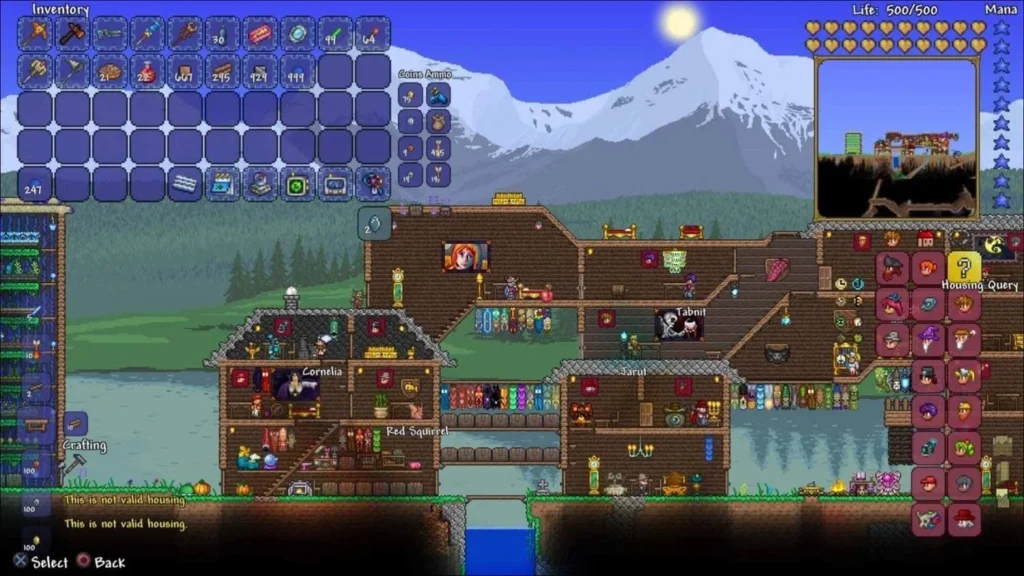
Multiplayer in Terraria scales with player groups, offering cooperative exploration, shared bases, and coordinated boss fights that intensify the adventure.
| Feature | PC / Desktop | Console / Mobile | Notes |
|---|---|---|---|
| Max Players per World | Up to 32 | 4–8 | Platform dependent |
| Online Play Modes | Co-op survival, boss runs, and events | Co-op sessions via platform network | Public or private sessions |
| Local Co-op / Split-Screen | Limited support | Supported on consoles | Hardware dependent |
| Cross-Platform Play | No cross-play with consoles | — | Typically not supported |
| Lobby Features | Public/private, password options | Public/private sessions | Host controls privacy |
Host-controlled sessions and world settings let players tailor the social experience to their preferences, from casual exploration to structured team runs.
Technical Specifications and System Requirements
Terraria presents a surprisingly modest technical footprint for a modern sandbox and remains highly accessible across a wide range of systems. This section breaks down the technical specifications you should consider before sinking hours into exploration and building, including how the game performs on PC, consoles, and mobile devices. You will find that the PC edition tolerates older hardware well, while console and mobile ports carry platform specific performance targets and input paradigms that influence the overall feel and responsiveness. Understanding these specifications helps you predict how smooth boss fights, large build projects, and multiplayer sessions will run on your setup. Finally, we cover how updates and mods can affect performance and what players can do to optimize their experience across platforms.
Minimum and Recommended PC Specs
Terraria’s PC version is famous for running smoothly on a wide spectrum of hardware, and that flexibility is part of its enduring appeal. While the official minimum specs are modest, they are enough to deliver the core experience: procedurally generated worlds, pixel art combat, and a bustling inventory management system. In practice, many players can launch the game on older laptops and midrange desktops without upgrading, provided they are not pushing extremely large worlds at maximum texture quality. The game benefits from a 64-bit operating system and a capable GPU, especially when playing with mods or in multiplayer sessions where several players’ inventories are interacting in real time. For Windows, macOS, and Linux, the underlying engine remains lightweight, and the draw calls are optimized for a 2D sprite based presentation that still feels vibrant and dynamic. Storage needs are minimal; even large worlds, once downloaded, occupy only a few hundred megabytes and expand modestly as you explore and craft. When it comes to multiplayer, a stable connection is more critical than the highest frame rate since synchronization between clients happens frequently during cooperative exploration and boss fights. In terms of frame rates, most systems that meet the minimum requirements can expect a steady 30fps, with occasional dips in highly populated areas or during intense battles in larger worlds. With newer hardware, and especially under solo play, you can see 60fps in many scenes, particularly when rendering fewer mods or lower texture packs. The game’s performance is also influenced by the chosen graphical settings; turning up texture detail or enabling post-processing effects can have a noticeable impact on frame rate if your GPU is closer to the minimum line. It’s also important to consider how you configure your world size; the default worlds are sizable, but you can choose smaller seeds to reduce memory usage and load times. The storage footprint remains manageable across updates, yet major patches occasionally introduce new assets that slightly increase disk space requirements. If you plan to modify the game, be mindful that some mods add new textures, sounds, or behavior scripts that can increase RAM usage and occasionally cause compatibility issues with other mods. Finally, for players curious about cross platform play, PC versions support multiplayer primarily within the PC family; console and mobile ports run on separate code paths and typically do not share saves or worlds with the PC edition, which helps preserve stable performance across platforms while delivering unique platform specific features.
Minimum Requirements
Minimum Requirements: To run Terraria on Windows, macOS, or Linux at the most basic level, you need an OS that is newer than the oldest supported version, a basic CPU, a small amount of RAM, and a GPU that can render the 2D world. On Windows, the game requires Windows XP SP3 or newer; macOS users should be on a version roughly compatible with modern apps; Linux users should have a compatible distro with OpenGL support. A 2 GHz processor is the baseline, paired with 2 GB of system memory to ensure the game and the operating system both have breathing room. A shader model 3.0 capable GPU is recommended to ensure color and lighting effects render correctly, but Terraria can still run on integrated graphics with minimal VRAM. Storage space is modest; around 200 MB free space is sufficient for the base game and a few early worlds. A stable internet connection is useful for multiplayer, but local single player play does not require it. It’s worth noting that some players may experience longer load times on very old hardware, especially when generating a new world for the first time. If you do not meet the minimum specs, you may experience frequent stutters, longer load times, or occasional crashes during intense events. For laptops with integrated graphics, close background applications to free memory and consider lowering texture detail to improve frame rates. The minimum configuration also means there is little headroom for mods or texture packs, which is why players who want a more fluid experience often target the recommended spec. Finally, upgrading to even modest components, such as a small RAM increase or a better GPU, can dramatically improve the feel of exploration and combat, reducing load times and smoothing out open world exploration during busy moments. Practically, you should expect the base experience to be perfectly playable on many midrange laptops from the last decade, and the game handles screen resolution changes gracefully, allowing you to scale details without forcing a long download or reinstall. If you are color graded by performance concerns, test a lower texture preset and disable shadows; while the game does not rely on heavy shading, reducing post-processing can help. For macOS and Linux users, ensure you have current graphics drivers and a compatible runtime for the build, as out-of-date drivers can cause stability issues in modded play or in multiplayer.
Recommended Requirements
Recommended Requirements: For a smoother Terraria experience on Windows, macOS, or Linux, a modern 64-bit system is ideal. A contemporary dual-core or better CPU with four threads at reasonable clock speeds is suggested, along with 4 GB of RAM or more to keep the game responsive while running other applications or mods. A dedicated graphics card with shader model 3.0 or DirectX 11 support and at least 2 GB of VRAM provides comfortable visuals and stable frame rates, especially when you couple it with higher texture packs or demanding lighting effects. Storage 500 MB or more is ample for the base game, plus space for patch files and optional mods if you decide to experiment within the PC edition. A fast internet connection is important for multiplayer sessions, server hosting, and content downloads. With these specifications you can expect the game to run at higher fidelity, with fewer frame drops during large battles or when building complex structures. The recommended setup also gives you headroom to host small private servers, run voice chat while playing, and keep background applications from interfering with the game. If you plan to run mods, you may want a bit more RAM to handle additional textures, sound packs, or scripted changes; consider 6 to 8 GB if you intend to run several large texture packs or complex mods alongside the base game. Finally, remember that texture packs and shader enhancements are optional choices, and they can be toggled off to recover performance on less capable machines. On Linux and macOS, ensure your system libraries and drivers are up to date to maintain compatibility with your chosen mods and prevent crashes during long play sessions. Additionally, if you frequently host servers or run large worlds with many players, stepping up to 8 GB RAM and an SSD can noticeably reduce load times and improve stability during busy evenings of co op play.
Console and Mobile Requirements
Console versions of Terraria are designed to fit the performance envelope of each platform while preserving the core gameplay loop of exploration, building, and combat. On modern consoles, you can expect a steady frame rate and responsive input with typical targets around 60fps in most scenarios, though large builds, heavy particle effects, or crowded environments can introduce occasional dips. Resolutions vary by system and mode, with handheld devices often running at lower internal resolution to preserve frame rate, while docked consoles may push closer to 1080p depending on the model and game mode. Load times are influenced by disk speed and patch sizes, with digital downloads usually delivering fasterboots than physical media and with patches that range from a few hundred megabytes to over a gigabyte when major updates arrive. Console controllers provide precise navigation and inventory management, and UI elements are adapted for gamepad use, although some consoles offer optional touch inputs on select menus. Cross platform play between PC and console editions is typically limited or not supported, as each code path optimizes for platform-specific inputs and performance targets, which helps maintain balance and stability across ecosystems. Cloud saves are available on some platforms, enabling continuation of a world across devices within the same family, though this feature may not be universal across all consoles. Content updates on consoles are generally aligned with each platform’s patch cadence, which means console owners might see new features a little after PC players while preserving stability on the system. The mobile edition supports iOS and Android devices with touch controls and a compact UI designed for smaller screens. On mobile, performance depends heavily on device capabilities, with newer phones delivering responsive play and consistent frame rates, while older devices may see occasional frame drops during boss battles or large constructions. Storage requirements for mobile are modest, typically a few hundred megabytes for the base game and world data, with additional space needed for world backups and downloaded packs. If you plan to play on multiple platforms, be mindful of platform specific limitations such as save compatibility, cloud save availability, and control schemes, which can influence how you approach multiplayer sessions and shared builds. Overall, console and mobile versions bring the core Terraria experience to more players, trading some PC specific features for platform tuned control schemes and stability while preserving the signature mix of exploration, building, and action.
Mod Support and Performance Tips
On PC, Terraria supports a robust modding ecosystem through tModLoader, which lets you install new items, bosses, biomes, and graphical tweaks that extend the sandbox beyond the base game. Mods are community created and vary in complexity, so you should review compatibility notes before enabling them in a save. Console and mobile versions do not officially support mods, which preserves stability and ensures a consistent experience for players on those platforms. If you do decide to mod on PC, start with a small collection of lightweight changes and back up your worlds frequently in case a mod conflicts with another or with a game update. Performance can be affected by mods that add more textures or more complex effects, so monitor FPS and adjust settings accordingly. Ensure you are running the latest tModLoader version and keep your GPU drivers up to date. When testing mods, consider running them in a clean profile to prevent conflicts with other software. If you plan to play multiplayer with mods, coordinate with other players to ensure everyone has the same mods and versions installed to avoid desync issues. Mods that replace or augment blocks and items tend to be safer choices than those that overhaul core mechanics, but always read notes from the mod author. For performance optimization, cap the frame rate, play in windowed mode for easier debugging, and reduce texture detail if you experience stuttering after adding a new mod pack. Finally, remember that mods are optional; they are great for extending the game, but they are not necessary to enjoy the core loop of exploration, crafting, and combat that defines Terraria.
Pricing, Offers, and Purchase Options
Terraria pricing is designed to stay accessible while the game grows through free updates and regular sales. In this review section, we examine base pricing, edition options, and what players should expect to receive with each purchase. The pixelated world and its creative gameplay remain the core draw, so understanding purchase options helps new players start quickly and veterans decide when to upgrade. Across PC, consoles, and mobile, prices shift with regional policies and seasonal promotions, and this guide highlights where to buy and what to look for. By tracking these purchase options, you can maximize value while enjoying multiplayer adventures, boss battles, and the ongoing Terraria updates.
Base Game Pricing and Editions
Terraria is typically offered as a single base edition across most storefronts, with the price kept modest to reflect its long-running popularity and ongoing updates. On PC and most consoles, the base game commonly appears around the ten-dollar mark in USD equivalents, with regional pricing adapting to local currencies and taxes. This pricing strategy keeps the core sandbox experience—exploration, building, and combat—within reach for both new players and returning fans. It also means you can jump into the pixelated world and start crafting, fighting bosses, and exploring biomes without a large upfront cost.
Deluxe or Collector’s bundles are not standard across every storefront, but in some markets retailers have offered limited-time editions that include digital extras such as a soundtrack, artbook, or quick-start guide. The exact contents vary by platform and store, so it’s important to read the product page carefully before purchasing. If you value these extras, compare the bundle price against the base game to determine whether the extra content adds meaningful value for your playstyle.
One important note for players is that major Terraria updates are provided free of charge. The Journey’s End era and subsequent patches added new bosses, biomes, items, and quality-of-life improvements without requiring a separate paid expansion. This means that the price you pay at purchase persists as your entry point into a living sandbox that continues to evolve alongside the community.
Regional pricing and sales behavior also affect value. Prices can vary widely by country, and seasonal discounts occur on major platforms around summer and winter sales, with occasional flash deals during short promotional windows. If you are waiting for a sale, you may find the game dropping well below its standard price for a limited time, which makes now an attractive moment to buy for first-timers or for players who want to revisit the world with friends.
Finally, consider your platform when assessing value. Some bundles are platform-specific or exclusive to certain storefronts, and digital extras in bundles may not be transferable between versions. If you plan to play with friends on a different system, check cross-platform support and note that the core Terraria experience remains consistent across editions, with the same crafting system, pixel art visuals, and the expansive world you remember from your first night in the cave.
Sales, Bundles and Promotions
Terraria tends to follow the typical indie game sales pattern, with frequent price reductions during major digital storefront events. In practice, you can expect the base game to drop during Steam Summer Sale, Winter Sale, and regional promotions, sometimes by 30–60 percent. The timing of these events varies by region and platform, so keeping an eye on sale calendars helps you lock in a favorable price without missing out on multiplayer adventures with friends.
Bundles that pair Terraria with other indie titles or with digital extras appear sporadically. These bundles may include a soundtrack, a small art book, or a quick-start guide, and they can provide added value for players who are building a library of games with a similar vibe. Because promotions are time-limited, be sure to compare the bundle contents and the standalone base game to confirm you are getting the best deal for your preferred platform.
For mobile and console storefronts, discounts are also common, though the depth and timing of promotions can differ from PC markets. Some platform stores may run exclusive promos that do not appear on Steam, while others may offer loyalty rewards or bundle pricing for returning customers. The multiplayer community also benefits from occasional cross-promotion events that coincide with price cuts, encouraging more players to join collaborative builds.
While price drops are a key incentive, consider the value of parity across platforms. If you own the game on multiple devices, assess whether a sale on one storefront makes it worth purchasing again on another to take advantage of platform-specific features like portable play or local co-op. In general, Steam and major console stores provide the most consistent discounts, with Humble Bundle occasionally presenting bundled savings that complement ongoing Terraria updates.
Seasonal promotion cycles encourage experimentation, as the game’s timeless appeal—pixel art aesthetics, crafting system, exploration, and boss battles—remains compelling even after many years. For new players, a well-timed sale can reduce initial risk, while veterans can wait for bundle deals that include related titles to expand a shared sandbox experience. Remember to check both the store page and community hubs for user comments about discount reliability and regional variations.
Overall, Sales, Bundles and Promotions in Terraria are predictable enough to plan around, yet flexible enough to surprise. The steady exposure to discounts mirrors the game’s enduring popularity and the active online community. If you value the creative sandbox, these promotions can make your entry into multiplayer adventures and shared builds even more accessible.
Where to Buy and Platform Stores
Terraria is available through multiple major storefronts, ensuring broad access across PC, consoles, and mobile devices. On PC, Steam remains the primary distribution channel, while Windows users may also encounter the Microsoft Store version. Console players can buy Terraria on Nintendo Switch, PlayStation Store (PS4/PS5), and Xbox Store for Xbox One and Series X|S. Mobile players will find Terraria on the Apple App Store and Google Play Store. Each storefront handles regional pricing and tax rules differently, so prices can vary by country.
Storefront notes matter: Steam often provides automatic updates and cloud saves, while console stores emphasize platform-specific features such as trophy/achievement systems and companion apps. Nintendo’s storefront might include rearranged menus and a Switch-specific control scheme, whereas mobile stores emphasize touch-based interfaces. If you track when a platform gains a new edition or optimization, you can choose the version that best fits your hardware and playstyle.
Cross-platform play is supported in several configurations, but players should verify the exact version compatibility before purchasing to avoid missing features or save compatibility issues. Regional discounts and bundle offers may also skew which storefront presents the best value. For players who value game longevity and access, Steam and major console stores typically provide the most consistent pricing and reliable updates, while mobile versions offer convenient on-the-go play.
Refunds, DLC and Expansion Pricing
Refund policies vary by storefront, so always check the official terms before purchasing. On Steam, standard refunds exist for games within a limited window of time and usage, enabling you to try Terraria risk-free and request a refund if it does not meet expectations. Other stores, such as console marketplaces, enforce their own return rules, which may differ in duration and eligibility. If you are buying on a mobile store, review the platform’s policy to understand whether refunds are available after download or usage.
DLC costs in Terraria are modest and mostly revolve around standalone digital extras rather than official paid expansions. In practice, you may encounter bundles that include a soundtrack or artbook sold separately, or retailer-specific add-ons that are not required to enjoy the full sandbox experience. The core content updates—the new bosses, biomes, items, and quality-of-life tweaks—are provided for free in ongoing Terraria updates.
Expansion pricing is generally non-existent in the official line; there are no mandatory paid expansions to unlock major content. If you see a line advertised as a paid expansion, verify whether it is an authorized bundle or a retailer promotion rather than an official patch. When evaluating value, consider whether any DLC aligns with your interests or simply acts as a separate collectible.
In short, refunds, DLC and expansion pricing for Terraria favor flexible options: free major updates, occasional standalone digital extras, and storefront-specific refund terms. Always confirm the exact policy on your chosen platform and compare with other storefronts to maximize value while pursuing a pixelated world of exploration and building with friends.